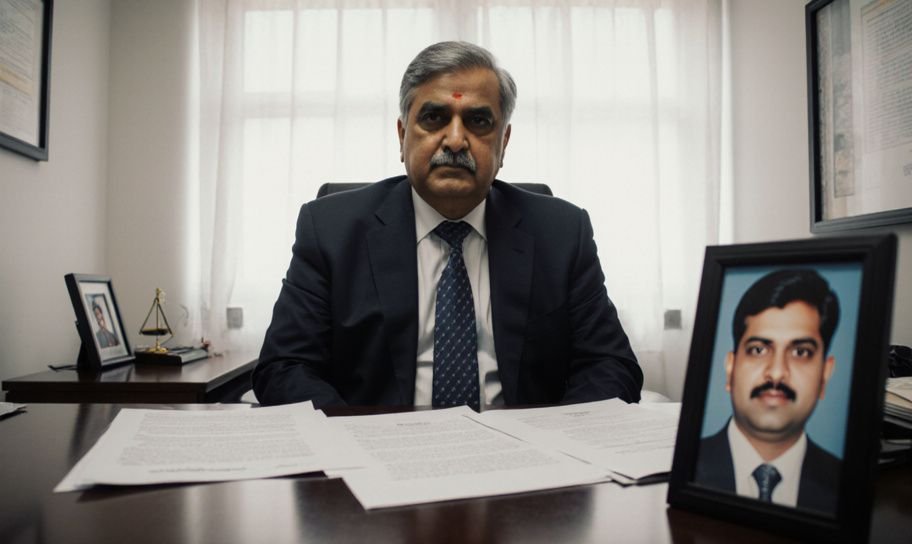
In a recent decision by the Madras High Court, Narmadha, a Special District Revenue Officer, was found guilty of contempt for not following a court order related to land compensation. Here's a breakdown of what happened.
Back in 2017, the government planned a massive expressway from Bangalore to Chennai. This required taking over land in Kanchipuram District, including areas in Nemili-A and Ayakolathur villages. Money was supposed to be paid to landowners, but things got complicated when some land was supposedly labeled incorrectly.
R. Rajendran, the person who brought the case, claimed he owned plots in the area. He argued that certain lands marked for public use (like parks and schools) were wrongly labeled as private. This mix-up led to money being wrongly paid to individuals instead of being kept for public use.
On February 10, 2020, the court ordered that any compensation should be put in a bank, not given to individuals, until the ownership issue was sorted out. This was to protect the money while the legal battle continued.
"The compensation amount should be invested in an interest-fetching Fixed Deposit in any Nationalised Bank," said the court.
Despite this clear instruction, Narmadha and her team gave out compensation to private parties, leading to a contempt petition. Narmadha argued it was a misunderstanding, claiming she followed official records that labeled the lands as private.
On August 4, 2023, the court found Narmadha guilty of contempt, stating she knowingly violated the temporary order. The court emphasized that any confusion should have been clarified through legal channels, not by making decisions on her own.
Narmadha appealed, arguing she acted in good faith based on available records. She had already served 19 days of her sentence and asked the court to consider this as enough punishment. However, the court maintained that the sentence was justified to uphold respect for court orders.
On February 23, 2026, Judges P. Velmurugan and M. Jothiraman dismissed the appeal, insisting that the remaining sentence be served. They highlighted the importance of sticking to court orders and the implications of not following them.
The court ultimately decided that Narmadha had to serve the rest of her sentence to emphasize the importance of following legal orders.