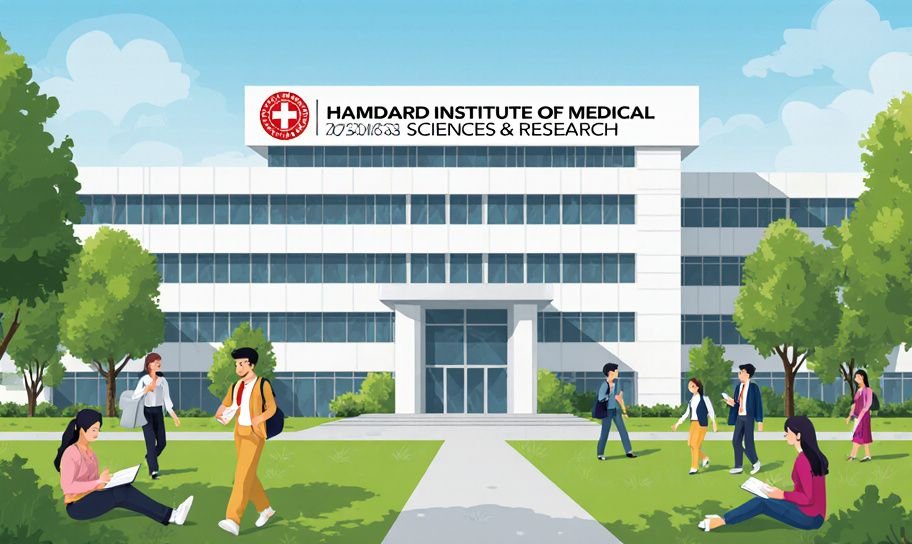
The Delhi High Court recently canceled an order involving Jamia Hamdard University and the allocation of MBBS seats at the Hamdard Institute of Medical Sciences & Research (HIMSR) for the 2025-26 academic year. Here's what happened.
On December 8, 2025, the Delhi High Court's Executing Court ordered Jamia Hamdard University to agree to allow 150 MBBS seats at HIMSR. Jamia Hamdard University challenged this because it was not involved in the original agreement but was told to follow the Arbitral Tribunal's order.
The case started from a Family Settlement Agreement made on October 22, 2019, which split the Hamdard family's businesses and institutions into two groups: the HLT Group and the HFI Group. Arguments over managing HIMSR led to arbitration.
The Arbitral Tribunal's order on August 12, 2025, supported HIMSR's 150 MBBS seats, but only if it followed the law. Jamia Hamdard University argued that the order went beyond legal limits. The Tribunal and the Court explained that support should not break any laws.
The Delhi High Court found that the Executing Court went too far by deciding on the legality of withdrawing the agreement, which it shouldn't have done. It also considered forcing actions that weren't right for the situation.
"The Executing Court went beyond what it was supposed to do."
Jamia Hamdard University argued that giving the agreement broke UGC Rules, which don't allow affiliating other institutions. The University Grants Commission (UGC) and National Medical Commission (NMC) were not involved in the arbitration, making it harder to enforce.
The High Court canceled the Executing Court's order, stressing that Jamia Hamdard University must follow the law and regulations. The rights of all parties can still be decided in ongoing cases.
This case shows the careful balance between arbitration orders and legal rules, making sure that legal rules are followed in educational agreements.