Quick Summary: In a recent legal showdown, the Bombay High Court's Aurangabad Bench dealt with a disagreement between Hule Constructions and the Command Area Development Authority over a delayed irrigation project. The court upheld a decision made during arbitration that favored Hule Constructions, despite the government's appeal.
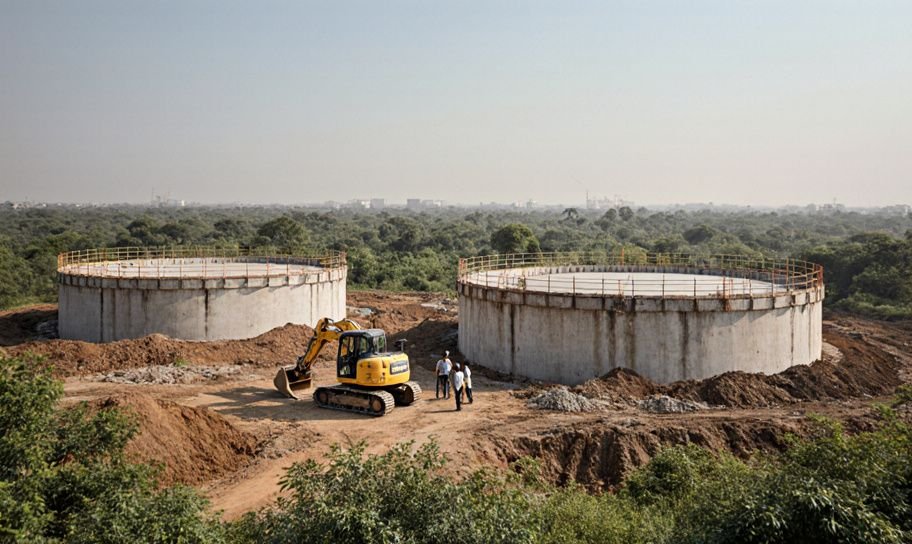
This case involves the Chief Engineer and other officials from the Command Area Development Authority in Aurangabad, Maharashtra, and Hule Constructions, led by Managing Director Vishwanath Dagdoba Hule. The disagreement centers around a project to repair and renovate 19 minor irrigation tanks in Beed district, Maharashtra, valued at approximately ₹29.55 crore.
The project began with a work order issued on November 17, 2006, and was supposed to be completed by November 16, 2007. However, delays occurred due to incomplete silt surveys and other issues, leading to a three-year extension. This delay resulted in Hule Constructions claiming various losses.
Hule Constructions submitted several claims totaling over ₹30 crore for losses due to delays, overheads, and other issues. The arbitrator partly allowed claims amounting to ₹10.54 crore, including compensation for overhead losses and price increases.
Quote from the Arbitrator: "The breach of contract by the appellants led to the delays, justifying the compensation awarded."
The government challenged the arbitration award, arguing that the contract did not allow for price increases due to delays. They claimed that Hule Constructions was responsible for the delays and that the arbitration was not properly agreed upon by all parties.
On January 29, 2026, Justices Arun R. Pedneker and Vaishali Patil-Jadhav dismissed the government's appeal. They ruled that the arbitration process was valid and that the government had indeed broken the contract, causing delays. The court emphasized that the arbitrator's decision was based on the evidence and within their authority to make.
The court highlighted several legal examples, stating that objections to arbitration must be raised early, and if not, they are considered given up. They also noted that an arbitrator's interpretation of a contract should not be easily changed unless it's unreasonable.
The court decided that the arbitration process was fair and that the government was responsible for the delays, which justified the compensation awarded to Hule Constructions. This case highlights the importance of sticking to agreements and shows how arbitration can be a useful way to solve complicated business disagreements.