Summary: The Supreme Court of India recently gave a decision on a long-standing industrial argument involving M/S Premium Transmission Pvt. Limited and the State of Maharashtra. The case was about job issues and whether labor contracts were legal.
On January 28, 2020, the Deputy Labour Commissioner in Aurangabad sent an industrial argument to the Industrial Court under the Industrial Disputes Act, 1947. This argument involved M/S Premium Transmission Pvt. Limited and was about the job status of several workers.
"Considering the said report of the Deputy Commissioner of Labour, Aurangabad Division, Aurangabad, it is satisfied that there is a clear case for sending the said argument to the Industrial Tribunal for a decision."
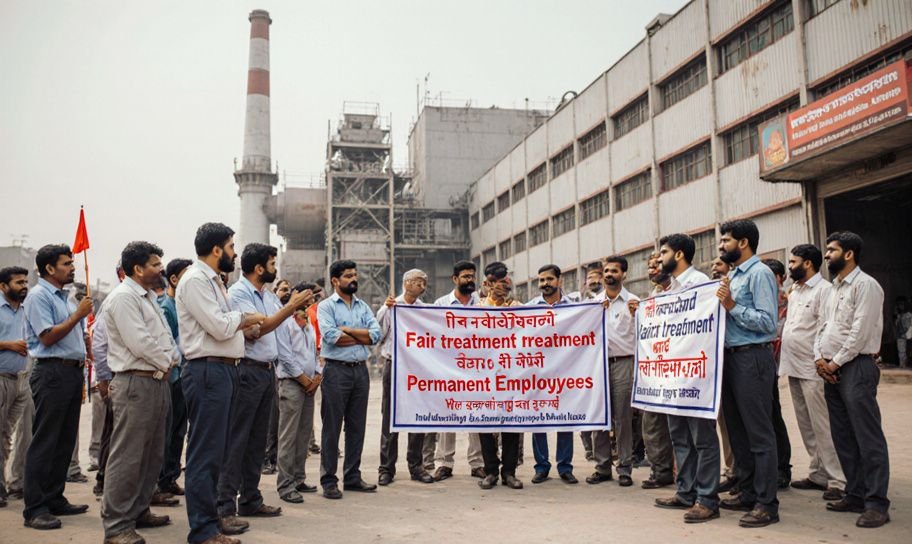
The workers, through their Union, asked for several things: - To be added to the official employee list immediately. - To be recognized as permanent employees after three months of continuous work. - To receive the same pay as the highest-paid workers. - To stop unfair treatment by the company.
M/S Premium Transmission Pvt. Limited, based in Aurangabad, argued that: - They hired fully trained people for regular work. - Extra work was given to registered labor contractors. - There was no direct employer-employee relationship with the contract workers.
The Union claimed that the labor contracts were fake, aiming to deny workers their rightful benefits. The management objected, stating the Union approached the Conciliation Officer without prior notice.
"The Union terms the said labor contracts as fake, bogus, and disguised to deny workers, working through the contractor, the benefits of equal pay and other related benefits."
The Supreme Court dismissed the appeal by M/S Premium Transmission, instructing the Industrial Court to decide on: - Whether the labor contracts were real or fake. - Whether the management was the main employer of the workers.
The court emphasized that arguments about the nature of employment should be resolved by the Industrial Court, not through initial objections.
The Supreme Court's decision ensures that the workers' complaints will be carefully looked into, giving them a fair chance for justice. The Industrial Court was directed to make a decision quickly, preferably within four months.