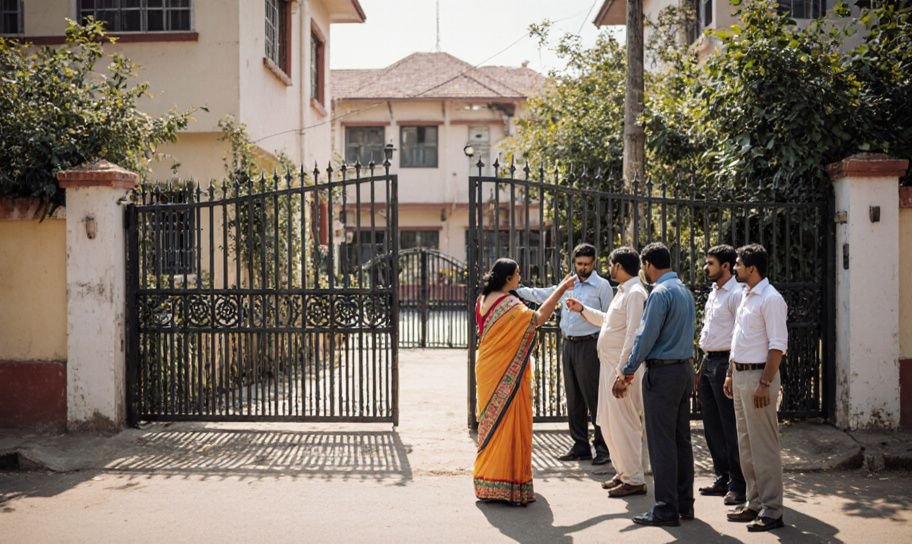
The Madurai Bench of the Madras High Court, led by Judge N. Senthilkumar, has made an important decision about a long-standing disagreement over land involving the Arulmigu Balasubramaniya Swami Temple in Karur District. Here's what happened:
The case is about land at S.No.238/2 in Kathaparai Village, Karur District. The person who brought the case, K. Lakshmi, says she owns the land through a sale document from 2017. However, the Hindu Religious and Charitable Endowment (HR & CE) Department accused K. Lakshmi of taking over temple property without permission.
The HR & CE Department sent a notice on November 17, 2022, telling K. Lakshmi to leave the land. K. Lakshmi and others opposed this in a series of legal petitions, which were resolved on January 22, 2025. The court allowed them to take the matter to a civil court by February 24, 2025.
Judge Senthilkumar instructed the main judge in Karur to speed up the hearing of the requests to stop any actions until the case is decided. The court stressed the importance of resolving these issues quickly to prevent further problems.
“The trial court is directed to dispose of the injunction applications within three months and the related suits within six months,” the order stated.
The HR & CE Department and temple authorities, represented by Mr. J. Ravindran and Mr. P. Athimoola Pandian, argued that the lands belong to the temple. They suggested making K. Lakshmi a tenant, offering her a rental agreement based on market value.
K. Lakshmi argued that she has been living on the land for decades. She expressed worries about being forced to leave and the slow court process, which she believes could cause her significant trouble.
The case is part of a larger issue involving temple lands across Tamil Nadu. A previous court decision in 2019 classified the lands and directed the HR & CE Department to take action against people taking over the land without permission.
The court's order is intended to quickly resolve the dispute, balancing the interests of the temple authorities and the residents. Until the requests to stop any actions are resolved, the parties are required to keep things as they are.
This judgment highlights the ongoing challenges in managing temple lands and the complicated legal issues surrounding property rights in India.