Summary: A tragic accident at a Delhi Metro construction site in 2009 led to a legal battle for compensation. This post breaks down the court's decision on compensation and accountability.
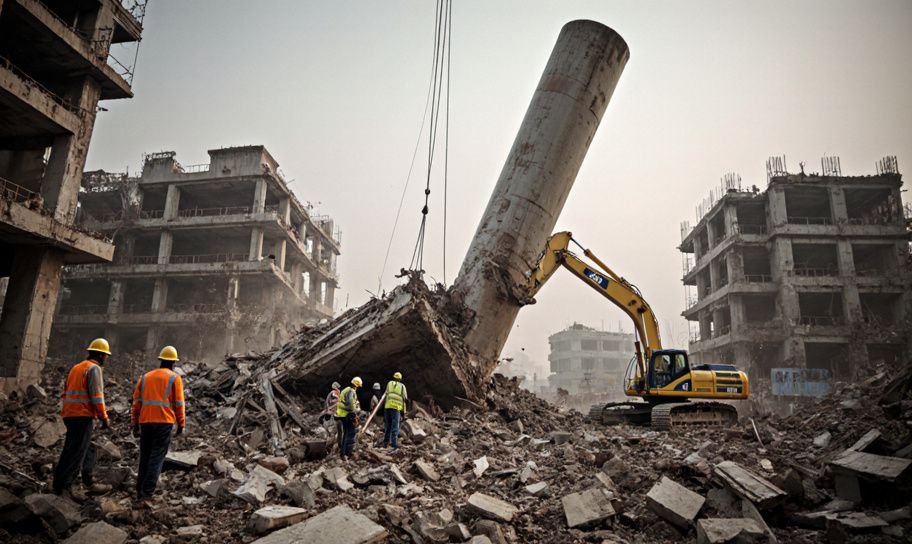
On July 12, 2009, a terrible accident happened at the Delhi Metro construction site in Zamrudpur, New Delhi. Pillar No. 67 fell down, causing the deaths of seven people, including six workers and an engineer. Fifteen others were seriously hurt. The construction was managed by Gammon India and overseen by the Delhi Metro Rail Corporation (DMRC).
The people who filed the lawsuit, led by Pappu Singh and others, claimed that the accident was due to serious carelessness by Gammon India and DMRC. They argued that cracks in the pillar were ignored, and important safety checks were not done, all to meet the deadline for the Commonwealth Games.
The case was filed in 2009, and after several changes and hearings, it was finally decided on February 5, 2026, by Judge Jyoti Singh. Pappu Singh and others asked for money to compensate the families of the deceased workers totaling Rs. 50 lakhs and Rs. 25 lakhs for those with minor injuries.
The court calculated compensation based on established rules, considering age, income, and dependents of the deceased. The amounts paid by Gammon India and DMRC were found to be in line with legal standards, and no additional compensation was warranted due to lack of evidence.
"The accident was a tragic event, but the evidence did not support claims of intentional carelessness," the court stated.
The court did not find grounds for extra damages as a punishment, as there was no evidence of malicious or reckless conduct by Gammon India and DMRC. However, small damages were awarded to acknowledge the loss of life.
The suit was decided with the compensation already paid deemed sufficient. The court emphasized the need to follow safety protocols to prevent such tragedies in the future.