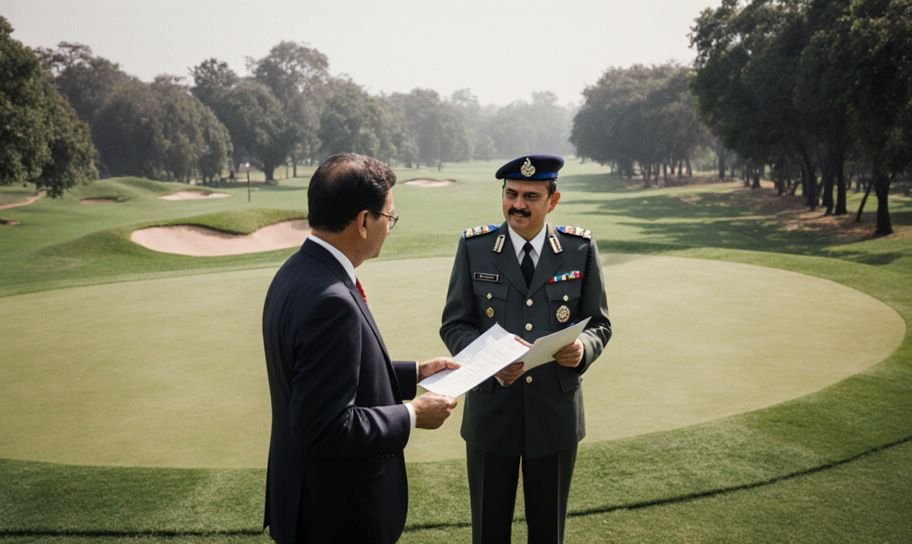
Quick Summary: The Army Golf Course in New Delhi lost its appeal against a tribunal's decision because they were late in filing it. The court said they couldn't excuse the delay beyond the allowed time. The case was about disagreements over payments to a retirement fund and fines.
The Army Golf Course, a non-profit group for defense members, went to the Delhi High Court. They were challenging a decision from the Employee Provident Fund Appellate Tribunal. The tribunal had rejected their appeal because it was filed too late.
In 1990, an officer from the Regional Provident Fund Commissioner visited the golf course. They decided that the Employees’ Provident Funds and Miscellaneous Provisions Act, 1952 applied to them. This meant they needed to pay into the provident fund at a higher rate.
Even though they disagreed, the Army Golf Course kept using its own fund. By 1997, they were told to pay Rs. 4,26,337 for past dues. They paid this in 1998, but later faced extra charges of Rs. 6,96,120 for paying late.
The Army Golf Course appealed against the extra charges on March 31, 2000. But the tribunal dismissed it on November 16, 2000, because it was filed late. They had 60 days to appeal, with a possible 60-day extension, but they were 277 days late.
Army Golf Course's Argument: The Army Golf Course argued that the tribunal should have the power to excuse the delay, pointing to a case from the Gujarat High Court.
UOI & ORS.'s Argument: UOI & ORS. said the tribunal cannot extend the time beyond 120 days, according to the rules.
Justice Renu Bhatnagar decided on December 11, 2025, that the tribunal was right. The law clearly states that delays beyond 120 days cannot be excused. The court dismissed the petition, leaving the Army Golf Course responsible for the fines.
The court made it clear that the tribunal could not forgive a delay of more than 60 days beyond the allowed time.
The court confirmed that the Army Golf Course's appeal was dismissed because it was filed too late, and they are responsible for paying the penalties.