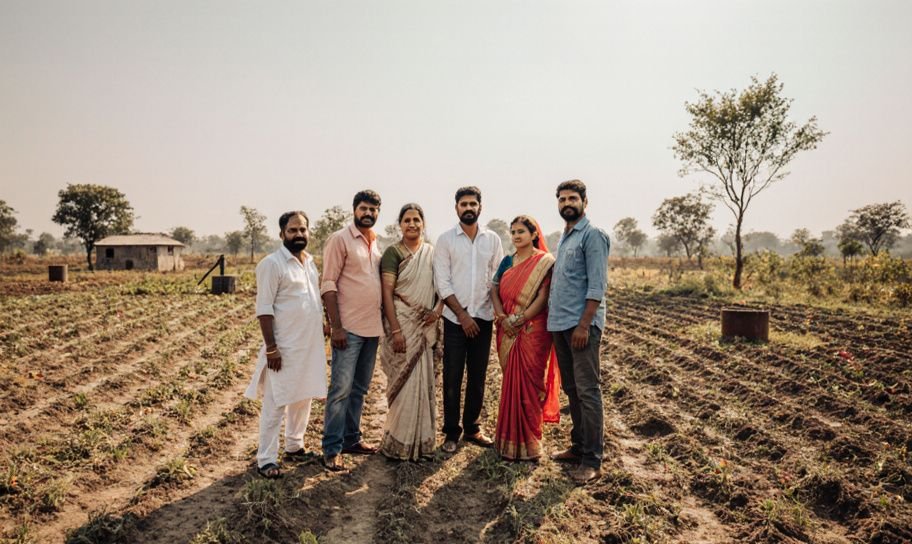
In a recent decision from the Bombay High Court, a group of farmers from Vaijapur, including Tukaram Sakharam's family, argued that the money they received for their land, which the government took over, was too low. The court had to decide if they deserved more money.
In Vaijapur, several farmers, including Tukaram Sakharam's family, had their lands taken by the government. The initial payment was set at Rs. 370 per R, but the farmers believed their lands were worth more. They wanted the lands to be considered as having irrigation, not dry, which would mean they should get more money.
On December 3, 1986, a notice was given for land acquisition, followed by a decision on November 22, 1990. The farmers did not challenge this at first. However, when another farmer, Hiralal Kishansingh Rajput, successfully got a higher rate through the court, the others sought similar compensation under a specific section of the Land Acquisition Act.
"The rate of Rs. 370/- per R was offered. No money was given for wells, buildings, or fruit-bearing trees on the acquired lands."
The Reference Court treated the lands as dry and denied extra money for trees and buildings. The farmers appealed, arguing for a reclassification to irrigated lands and more money.
On February 27, 2026, Justice Shailesh P. Brahme delivered the verdict. The court agreed that the farmers should receive money similar to what was given to Hiralal Kishansingh Rajput. This meant Rs. 1,500 per R for dry land and Rs. 2,250 per R for irrigated land. However, the court also stressed that the money should not exceed what was awarded in Hiralal's case.
"Appellants are entitled to receive rate of Rs. 1500/- per Are for dry land or Rs. 3000/- per Are for irrigated land."
The court recognized the farmers' rights to extra money for wells, buildings, and trees, which were initially ignored. It sent these matters back to the Reference Court for further review, ensuring a fair assessment of these claims.
The appeals were partly allowed, granting higher compensation rates. The Reference Court is now tasked with reassessing claims for additional compensation. The parties are expected to appear in court on March 18, 2026, to speed up the process.