Quick Summary: A court in Aurangabad has dealt with a complicated case about land compensation that involved several appeals. The disagreement is about whether the land is irrigated or dry, which affects how much money is given as compensation.
This case involves several appeals related to the government taking land in Vaijapur. The people appealing, who are the family members of landowners who have passed away, like Sakhahari Bhavani, wanted more money under a specific part of the Land Acquisition Act. The main question was whether their lands should be considered as having water for farming, which would mean they get more money.
On February 27, 2026, Justice Shailesh P. Brahme gave the decision. The court had to decide if Radhabai S. Salunke, Valmik Sakhahari Salunke, and others should get more money than what was first given, especially for things like trees and buildings on the land.
"Radhabai S. Salunke, Valmik Sakhahari Salunke, and others should get more money than the original amount decided and also extra money for wells, buildings, and trees."
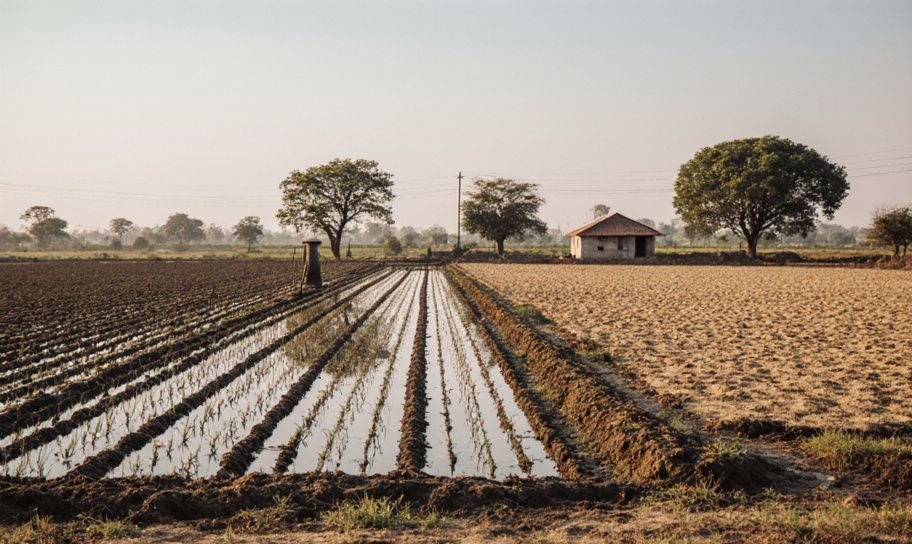
The people appealing said their lands were irrigated, which was different from what the Land Acquisition Officer said. The court agreed with Radhabai S. Salunke and Valmik Sakhahari Salunke, allowing a rate of Rs. 3,000 per R for irrigated lands, compared to Rs. 1,500 for dry lands.
For the second group, the court found that extra money for wells, buildings, and trees was unfairly denied. The cases were sent back to another court to look at these claims again.
The judgment mentioned several decisions from the Supreme Court to explain that Section 28-A is meant to help people get fair compensation, especially those who couldn't challenge the original decision.
"Section 28-A is a helpful part of the law meant to fix differences and make sure poor people get the same fair compensation as other landowners."
The other court will look at the claims for extra money again, with a deadline set for December 2026. This decision shows the ongoing fight for fair compensation in cases where the government takes land, emphasizing the need for clear classification and consideration of all land features.
This case highlights the importance of understanding land classification and its impact on compensation, which is crucial for landowners in similar disputes.