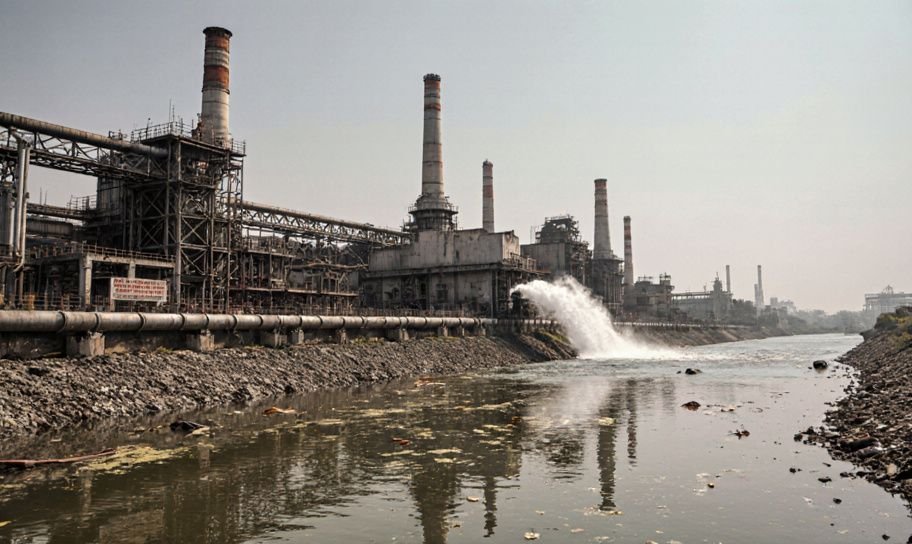
Summary: Raj Kumar Gupta, owner of M/S Kanwarji Raj Kumar, was initially sentenced to jail for polluting the Yamuna River. But thanks to a new law, his jail time was replaced with a hefty fine and a tree-planting order.
Back in 2017, Raj Kumar Gupta was found guilty by the Tis Hazari Courts in Delhi for breaking the Water (Prevention and Control of Pollution) Act, 1974. His factory was caught dumping untreated waste into public sewers, adding to the pollution of the Yamuna River. He was sentenced to three years in jail and fined ₹2 lakhs.
Gupta challenged the decision, and on August 11, 2017, his sentence was reduced to two years, but the fine stayed the same. The case moved between different courts, with Gupta looking for more leniency.
The case was connected to a 1994 Supreme Court order focused on protecting the Yamuna. Industries were told to clean waste before dumping it. Gupta's factory was checked in June 2000 and failed to follow the rules, leading to the legal actions.
Gupta's defense claimed the inspection was wrong and that he was wrongly accused. However, the courts found strong evidence, like inspection reports and witness statements, proving the violations.
In 2024, the Water Act was changed, removing jail time for these offenses and replacing it with fines. Gupta's lawyer argued that this new rule should apply to his case, a view supported by other similar cases.
On January 29, 2026, Justice Swarana Kanta Sharma decided to apply the new amendment. Gupta's jail sentence was canceled, but he was ordered to pay an extra ₹10 lakhs and plant 100 trees in Delhi.
The court stressed the importance of following environmental laws. Small businesses, like Gupta's, have a big impact on pollution levels and must follow the rules.
The court decided that instead of jail time, Raj Kumar Gupta would pay a total fine of ₹12 lakhs and plant 100 trees, reflecting the updated approach to handling environmental offenses.