Summary: A legal battle in Mumbai over property rights concludes with the court granting automatic transfer of property ownership to a housing society, despite objections from the original landowners.
The main people involved in this legal story are the Lokmanya Pan Bazar Association Ltd., the State of Maharashtra, and others, including the Harshad Cooperative Housing Society Ltd. The case was heard in the High Court of Judicature at Bombay, with Judge Amit Borkar in charge. The decision was made on December 9, 2025, after being put on hold on November 27, 2025.
Lokmanya Pan Bazar Association Ltd., a company registered in Mumbai, was created in 1968. They bought land in Kurla East, Mumbai, in 1969. The land was later considered extra land under the Urban Land Ceiling and Regulation Act, 1976. However, the State Government allowed an exception in 1977, letting the land be used for building homes for its members.
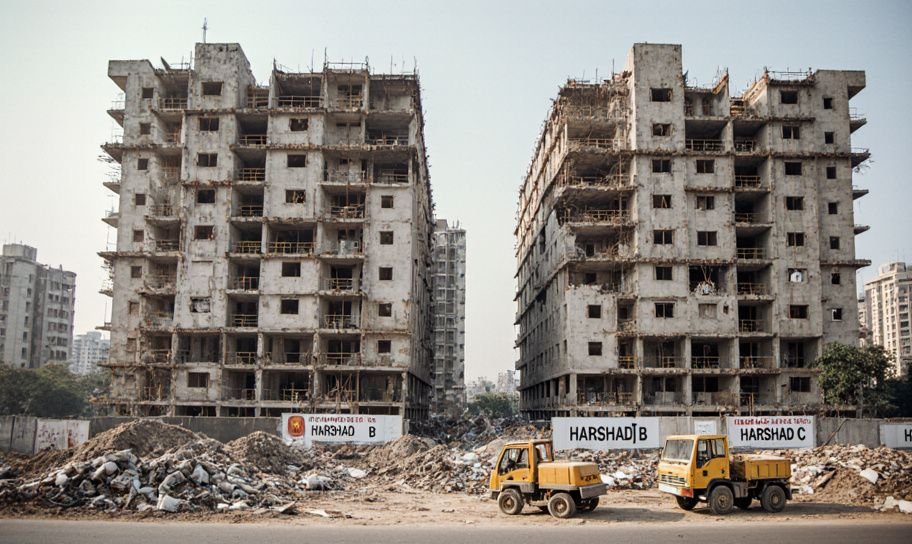
In 1981, Lokmanya allowed a developer to build buildings, but only two were finished: Harshad B and Harshad C. The agreements made with the people who were given apartments stated that the Lokmanya Association would remain the landowner, and the residents would not gain any ownership rights.
In 2002, the residents formed the Harshad Cooperative Housing Society Ltd. without Lokmanya's approval, leading to a disagreement over who owned the property and the transfer of ownership.
The Harshad Society applied for automatic transfer of ownership in 2013, saying that Lokmanya failed to complete the necessary paperwork. Lokmanya argued that the society's formation was dishonest and that the automatic transfer was granted wrongly.
Judge Amit Borkar found that Lokmanya did not update its address, causing problems with receiving notices. He also noted that the society had been taking care of the property for years, doing what an owner would do.
The court decided in favor of the Harshad Society, granting them automatic transfer of ownership. Judge Borkar emphasized that the rights of apartment buyers under the Maharashtra Ownership Flats Act (MOFA) were most important and could not be ignored by Lokmanya's claims of ownership.
"Calling the buyers Special Patron Members doesn't change the fact that it's a flat purchase under MOFA."
The court rejected Lokmanya's request and ordered them to pay Rs. 50,000 to the Harshad Society. All pending applications were resolved, and a request to delay the judgment was denied.
This case shows the importance of following legal responsibilities and the rights of apartment buyers in property disputes. The judgment reinforces the idea that legal rights cannot be avoided by technicalities or old claims of ownership.