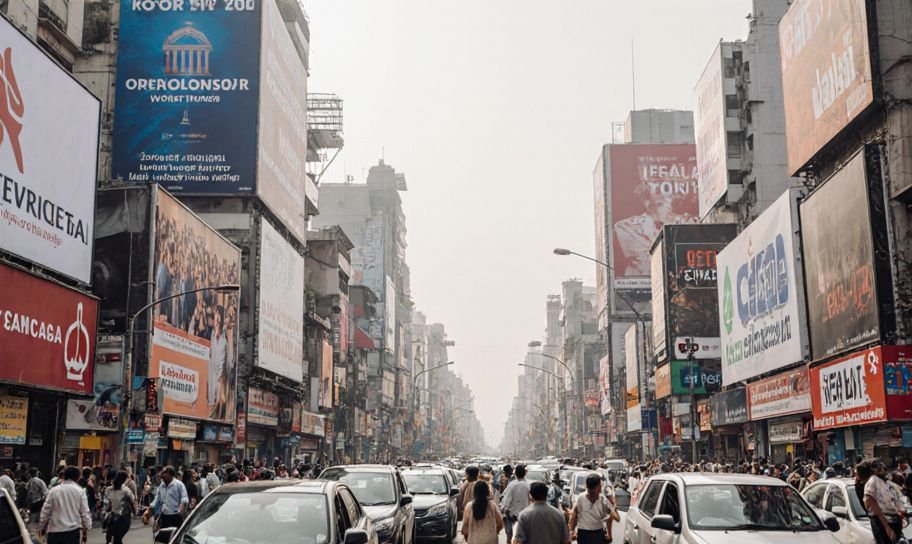
The Bombay High Court recently delivered a judgment on a group of requests challenging the Pune Municipal Corporation’s (PMC) decision to increase license fees for sky-signs and billboards. Here's a breakdown of the case and its implications.
The Case in Brief
The case was about the PMC's decision to raise license fees for sky-signs and billboards from Rs. 85 to Rs. 222 per square foot per year. The people challenging this, including Pranjal Advertising and other advertising companies, argued that this increase was unfair and was more like a tax than a fee.
Legal Background
- Authority to Charge Fees: The court confirmed that under certain sections of the Maharashtra Municipal Corporation Act (MMC Act), the PMC has the power to charge license fees for sky-signs and billboards.
- Regulatory Fee vs. Tax: The court decided that the fee is meant to control and manage the use of billboards, not to make money like a tax.
Key Arguments
- Challengers' View: Pranjal Advertising and others believed that the fee was really a tax, especially after advertisement taxes were included in the Goods and Services Tax (GST). They also said the increase was applied to past periods and didn't have the needed approvals.
- PMC's Defense: The PMC, represented by the Municipal Commissioner, argued that the fee was needed to manage the city’s visual appearance. They said the fee increase was based on current market rates and was necessary to cover management costs.
Court's Analysis
- Approval and Validation: The court noted that the Municipal Commissioner’s decision to raise fees was approved by the General Body of the PMC, making it valid.
- Applying to Past Periods: The court found no problem with applying the fee increase to past periods, as the necessary approvals were obtained.
- Legal Authority: The court rejected claims that the PMC didn't have the legal authority to make this decision, stating that the MMC Act's rules were not overridden by the GST laws.
Implications
This judgment shows that municipal bodies have the right to control and charge fees for managing city spaces. It highlights the balance between controlling city areas and making sure city functions are funded properly.
Summary of Verdict
The court's decision confirms the PMC's right to manage city advertising through these fees, emphasizing the importance of allowing cities to govern themselves and manage their finances effectively. This case provides a clear example of how cities can handle the challenges of managing and funding urban spaces.