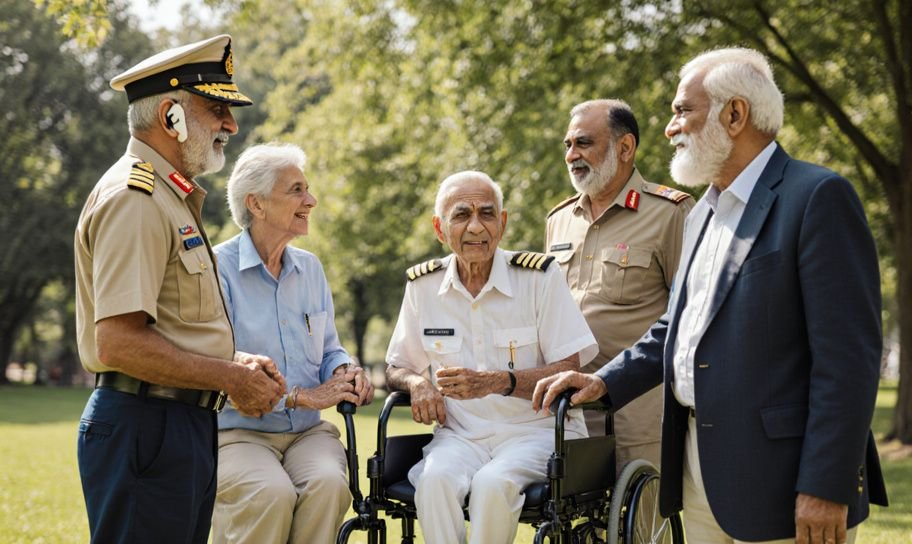
Summary: The Bombay High Court has decided to grant disability pensions to several military personnel, even though they were previously denied based on medical board opinions. The court stressed the importance of interpreting pension rules in a way that benefits those affected by health issues related to their service.
The case involved several legal challenges filed by the Union of India against military personnel, including Upendra Singh, who were awarded disability pensions by the Armed Forces Tribunal, Mumbai. These individuals, from both the Army and Navy, were dealing with various health problems linked to their military service.
Tribunal's Initial Ruling
The Armed Forces Tribunal had earlier granted disability pensions to the personnel, recognizing their health issues as related to their service. The conditions included diabetes, high blood pressure, and other ailments, which were considered worsened by military duties.
Union of India's Challenge
The Union of India, represented by Mr. Amarendra Mishra, argued against these decisions, insisting that the medical board's opinions should be final. The board had previously stated that many conditions were due to lifestyle and not worsened by service.
Court's Analysis
Medical Board's Role: The High Court, led by Chief Justice Shree Chandrashekhar and Justice Gautam A. Ankhad, pointed out that while the medical board's opinion is important, it is not the final word. The Tribunal can review these opinions, especially when the board does not provide enough reasoning.
Service Conditions: The court noted that many personnel served in tough environments, which could lead to health problems. For example, Lt. Col. S.K. Rathore served in operations like Rakshak and Parakram, which involved stressful conditions.
Legal Precedents: The court mentioned several Supreme Court rulings that emphasize the need to interpret pension rules generously to help affected personnel.
Final Judgment
On January 23, 2026, the court rejected the legal challenges by the Union of India, supporting the Tribunal's decision to grant disability pensions. The judgment was based on the idea that military personnel should not be denied benefits due to procedural issues or strict interpretations of rules.
This judgment reinforces the idea that disability pensions are a right for those whose health has been impacted by military service. It emphasizes the importance of considering the broader context of service conditions and supports a more understanding approach to pension entitlements.