Parties: Preetha Krishnan vs. The United India Insurance Co. Ltd.
Lawyers: Bijo Mathew Joy
Judges: Mr. Justice Sanjay Karol, Mr. Justice Nongmeikapam Kotiswar Singh
Judgment By: Mr. Justice Sanjay Karol
Case Number: 8307/2025
Summary: The Supreme Court of India decided on a case about payment for a car accident, focusing on a method called the "split multiplier." The court decided not to use this method, providing clear guidance on how to calculate payment amounts.
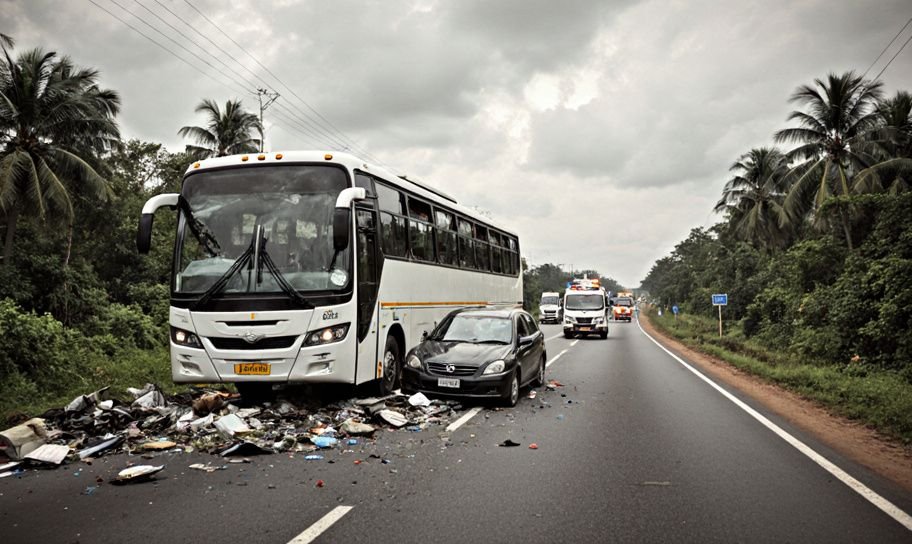
On August 3, 2012, T.I. Krishnan, who was 51 years old, sadly died in a car accident on the Pala-Thodupuzha Road. A bus, driven carelessly, hit his car. His family asked for payment on December 11, 2012, seeking ₹60,00,000, as Krishnan was an Assistant Engineer making ₹47,860 per month.
On April 2, 2014, the Motor Accidents Claims Tribunal (MACT) gave the family ₹44,04,912 with 7.5% interest each year. The Tribunal calculated this based on Krishnan's income, adding a 15% increase for future earnings and accounting for living costs.
The United India Insurance Co. and the family both appealed. On June 28, 2024, the Kerala High Court lowered the payment to ₹35,10,144, using a "split multiplier" to consider lower income after retirement. They adjusted amounts for family support, love and care, and funeral costs, dividing the total among the family.
Unhappy with the decision, the family appealed to the Supreme Court. On November 6, 2025, Justice Sanjay Karol and Justice Prashant Kumar Mishra decided not to use the "split multiplier," stressing the need for consistent payment calculations. The court restored the amount to ₹47,76,794, following standard practices from earlier cases like Sarla Verma v. DTC.
"Retirement from work doesn't count as a special reason to use the split multiplier."
The Supreme Court made it clear that the payment should be based on the person's age and income at the time of death, not what they might earn after retirement. This decision ensures fairness and consistency in payment amounts, affecting future cases all over India.
The court ordered the payment to be made by November 30, 2025, and instructed that this decision be shared with all High Courts and Tribunals for consistent application.