Summary: Mr. Rajesh Kumar challenged the taking of his gold jewelry by customs at Hyderabad airport. The court dismissed his request, telling him to talk to the customs office for a solution.
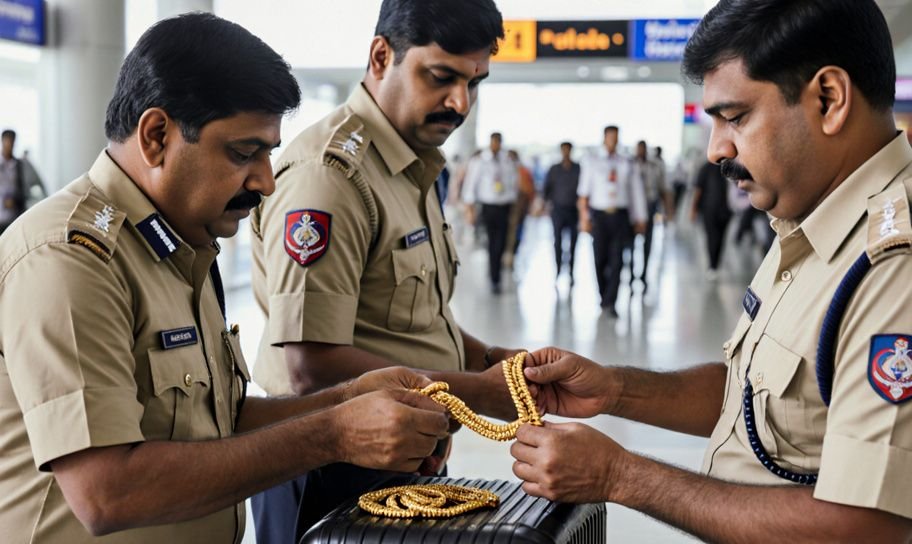
On September 15, 2024, Mr. Rajesh Kumar, a traveler arriving from Dubai, was stopped by customs officers at Rajiv Gandhi International Airport, Hyderabad. The officers took his gold jewelry, thinking it was brought in without paying the required taxes. The jewelry included a 22 KT gold chain and two gold rings, totaling 97.71 grams, which was more than the allowed limit under the Baggage Rules, 2016.
"Mr. Rajesh Kumar was stopped because it was believed he was bringing in gold jewelry without paying customs taxes."
Mr. Rajesh Kumar said the jewelry was legally bought in India, showing original receipts with BIS hallmark as proof. He argued that according to the Baggage Rules, he should be allowed to carry the jewelry without it being taken. Even after submitting requests for the jewelry's return, the customs office did not agree.
Customs officers said the jewelry was over the allowed weight for travelers. They noticed differences between the jewelry's weight as per receipts and the actual weight. Mr. Rajesh Kumar was told to pay the necessary taxes to get the jewelry back.
"Mr. Rajesh Kumar was carrying more than the weight allowed under Rule 5 of the Baggage Rules, 2016."
The court, with Judges P. Sam Koshy and Suddala Chalapathi Rao, dismissed the request, saying that these kinds of factual issues are not suitable for this type of court case. Mr. Rajesh Kumar was told to go to the right customs authority under the Customs Act, 1962.
"Mr. Rajesh Kumar should go to the customs authority to solve his problem."
The court's decision means Mr. Rajesh Kumar can file a request with the customs office, showing all important documents. The office is expected to follow the legal steps and give Mr. Rajesh Kumar a fair chance to prove his case.
This case shows how complicated customs rules can be and the need to follow them when bringing items across borders.