Quick Summary: In a complicated case about a serious accident, the Madras High Court agreed with a decision about who pays for damages when insurance gets canceled. The court confirmed that the lorry's insurance has to pay, but the taxi's owner has to cover the rest.
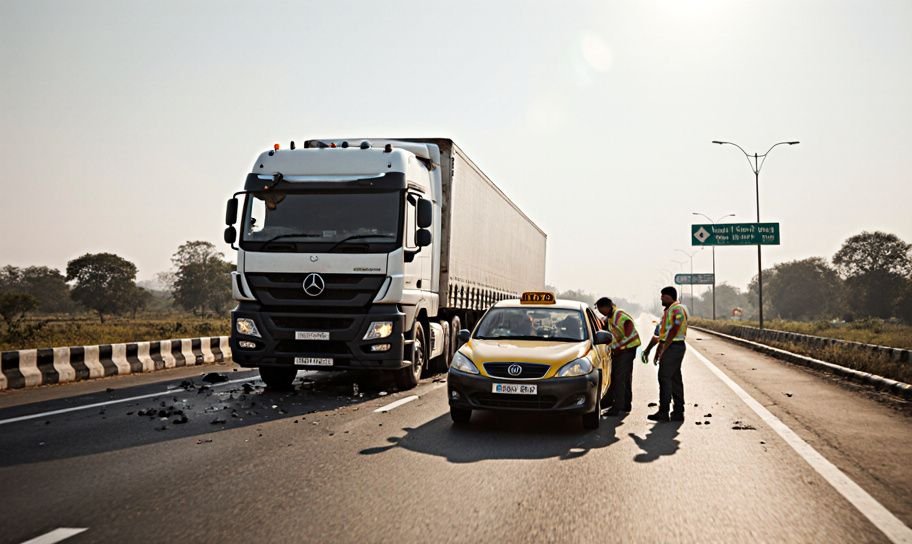
On October 9, 2016, a terrible accident happened near Karukkai village, Andimadam on the Jayamkondam-Virudhachalam highway. Balaji was driving his family in a taxi when a 12-wheeler lorry, driven recklessly, hit their car. Sadly, Balaji died on the spot, and his family was injured.
The accident led to a big legal fight. Balaji's family blamed the lorry driver for being careless. The lorry's insurance company, M/s. Royal Sundaram, argued that the taxi driver was at fault. They pointed out that the taxi driver was charged by the police for reckless driving.
The taxi was insured by New India Assurance, but there was a problem. The insurance was canceled because the cheque for the payment bounced. The insurance company said they informed the taxi owner and the Regional Transport Office (RTO) about the cancellation.
The Motor Accident Claims Tribunal in Ariyalur decided both drivers were equally at fault. They awarded compensation of Rs. 1,63,65,328 with interest. M/s. Royal Sundaram was ordered to pay half, while the taxi owner had to cover the rest since the insurance was canceled.
Both parties appealed. M/s. Royal Sundaram argued they shouldn't pay because the taxi driver was fully at fault. Balaji's family wanted the insurance to cover everything. On November 25, 2025, the Madras High Court, led by Dr. Justice G. Jayachandran and Mr. Justice Mummineni Sudheer Kumar, dismissed both appeals and confirmed the tribunal's decision.
"The Tribunal's order is in line with the law and the Supreme Court's guidance," the judges stated.
This case highlights the importance of making sure insurance payments are made on time. When a cheque bounces, it can leave the vehicle owner without coverage, as seen here. The court ruled that M/s. Royal Sundaram must pay because their coverage was valid, but the taxi owner was responsible due to the canceled policy.
In the end, this judgment underscores the importance of understanding insurance contracts and the consequences of not paying on time.