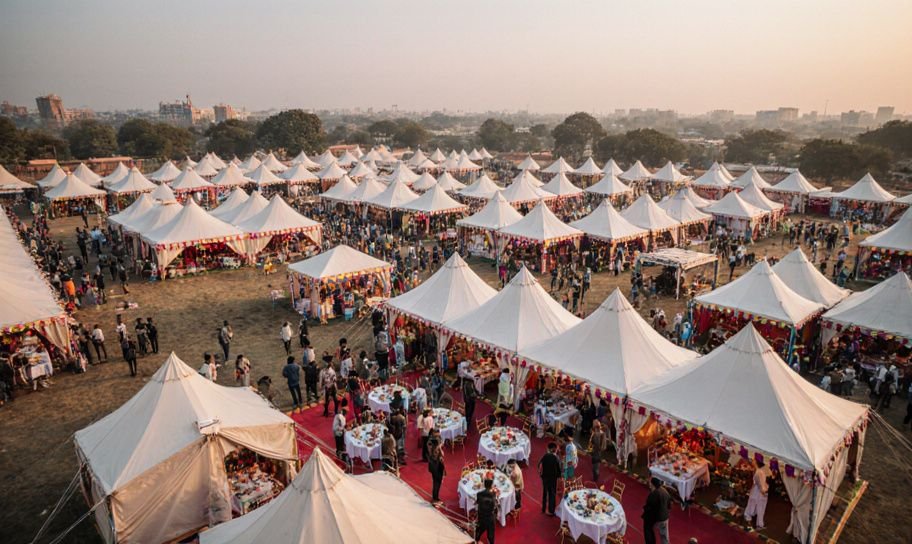
Here's a breakdown of the recent court decision involving Kapoor Tent & Caterers and the Delhi Tourism and Transportation Development Corporation (DTTDC). The case revolved around a disagreement over a contract for running facilities at the Azad Hind Gram Tourist Complex in Delhi.
On December 3, 2025, the Delhi High Court, with Judges Anil Kshetrapal and Harish Vaidyanathan Shankar in charge, rejected the appeal filed by Kapoor Tent & Caterers. They were challenging a decision made on April 20, 2015, which had already been supported by a Single Judge on February 22, 2017.
The story began on October 1, 2004, when Kapoor Tent & Caterers signed a ten-year contract with DTTDC to manage various facilities at the Azad Hind Gram Tourist Complex. However, problems started when the contract ended on September 14, 2009, and the renewal was only given for three months.
Kapoor Tent & Caterers wanted a third party to help settle the dispute, claiming they were promised a five-year extension verbally. Meanwhile, DTTDC argued for compensation because of unauthorized use and lost income. The Municipal Corporation of Delhi (MCD) even closed off the area due to unauthorized activities in 2011.
"The Arbitrator decided that there was no requirement for the Respondent to give a five-year extension of the License."
The court found that the Arbitrator had made decisions they were allowed to make. The claims and counter-claims were considered suitable for arbitration and related to the contract, not related to the Public Premises Act. The Arbitrator's decision to award compensation based on agreed rates was supported.
The appeal was rejected, and the decision from the arbitration was supported. This decision shows the limited chances for courts to change arbitration decisions, emphasizing the importance of sticking to contract terms and deadlines.