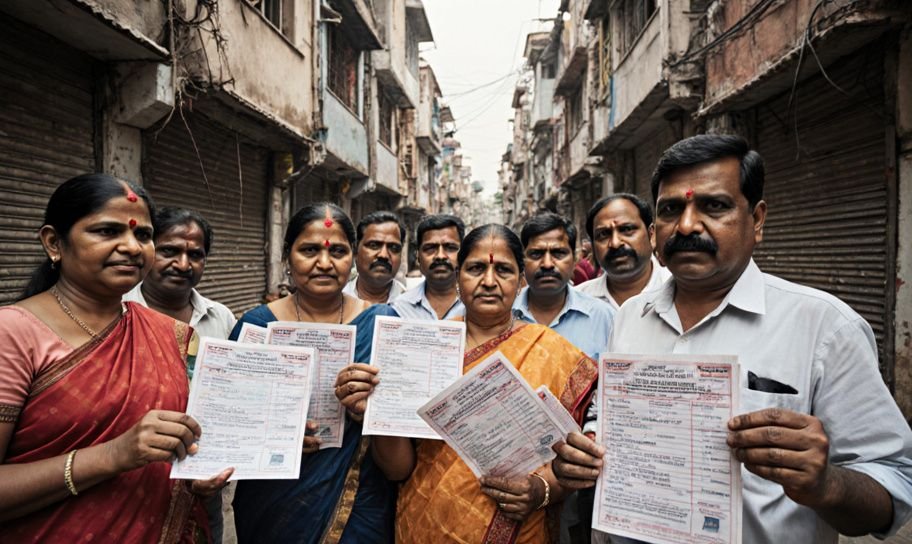
The Bombay High Court has decided against the Municipal Corporation of Greater Mumbai (BMC) in a case about alleged illegal building work in a Mumbai chawl. The court has ordered that no forceful action be taken against the residents until the case is completely settled in court.
In March 2025, the BMC sent notices to residents of Rakhmabai Mhatre Chawl in Mulund (East), Mumbai. These notices, dated March 15, 2025, said that the residents had illegal structures. The residents, including Sudhir Sambhaji Jadhav, challenged these notices, arguing their homes had been there long before the BMC's claims.
The residents, represented by Mr. Amit Ashok Gharte, provided a lot of paperwork to prove they lived there. They showed records like ration cards from 1987, property tax assessments from 1988, and electricity bills from 1987. These documents were meant to prove their homes had been there for a long time.
"There is overwhelming evidence which shows the existence of Rakhmabai Chawl since 1959-1960."
Judge Milind N. Jadhav noted that the BMC's notices were unclear and did not have specific details about the alleged illegal buildings. The court found that the BMC had not followed the correct steps and had not done any surveys or inspections before sending the notices.
"The impugned notice is as vague as it can be and thoroughly insufficient."
On December 15, 2025, the BMC filed statements in response, but these were found to be not good enough by the court. The court decided on January 5, 2026, that the BMC's actions might have been influenced by people interested in redevelopment.
Judge Jadhav emphasized that the residents' rights must be protected and ordered the BMC not to take any action against the buildings until the court case is finished.
The court's decision is a big relief for the residents of Rakhmabai Mhatre Chawl. It shows the importance of following the correct steps and respecting the rights of people who have lived in a place for a long time, especially in cases of redevelopment.