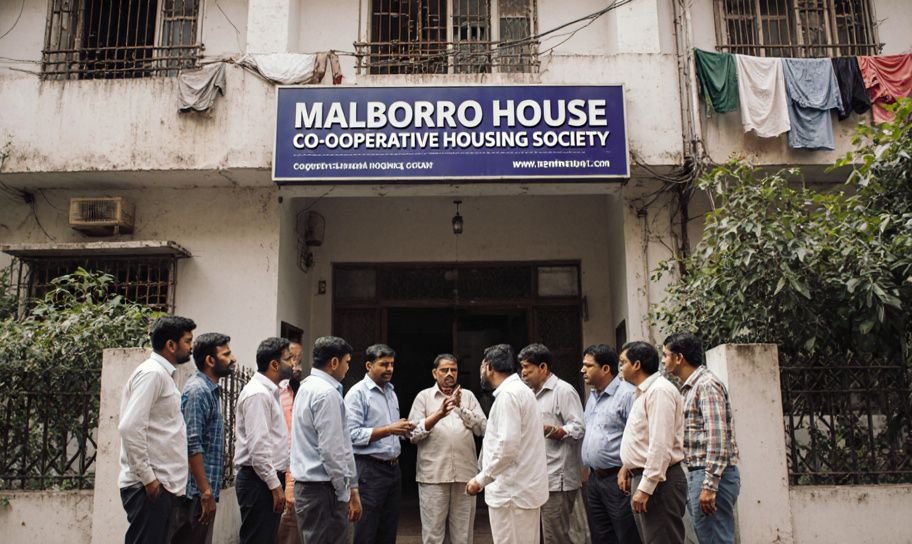
Quick Summary: The Bombay High Court decided that Apsara Co-operative Housing Society is not a "business" or a "company" under the relevant laws, rejecting claims for bonus and other payments by a former manager, Vijay Shankar Singh.
Background
Recently, the Apsara Co-operative Housing Society Ltd. in Mumbai opposed decisions from the Labour Court and Controlling Authority. These decisions required the society to pay money to their former manager, Vijay Shankar Singh, under the Industrial Disputes Act and the Payment of Gratuity Act.
The Challenge
On January 17, 2024, the Labour Court refused Apsara's request to throw out Singh's claims for bonus and gratuity. The housing society argued that it doesn't count as a "business" or "company," making the claims not valid.
The Facts
- Job Details: Vijay Shankar Singh was the Building Manager from August 5, 2013, until he was let go on October 15, 2022.
- Claims: Singh asked for Rs. 3,87,000 for unpaid bonus and leave wages and Rs. 4,67,308 as gratuity.
- Society's Argument: Apsara claimed it was not involved in any business activity and therefore not subject to the laws mentioned by Singh.
Legal Arguments
- Apsara's Side: Referring to past decisions, Apsara argued that housing societies are not businesses since they don't do business activities.
- Singh's Side: Singh argued the society had business-like features such as a clubhouse and telecommunication towers, justifying his claims.
Court's Analysis
- Business Activity: The court found that while the society earned some money from antennas and a clubhouse, these were not regular business activities.
- Business Definition: The court referred to earlier decisions, noting that personal services to society members do not make it a business.
- Company Definition: The court decided that the society's activities did not qualify as a "company" under the Maharashtra Shops Act.
Final Order
- Rejected Claims: Both the applications for bonus and gratuity were rejected.
- No Costs: Each party will pay its own legal costs.
This case explains the legal status of housing societies regarding labor and gratuity claims, showing the importance of business activity to be considered a business or company.