Summary: On December 24, 2025, the Bombay High Court delivered a decision on four requests. Candidates who took the Civil Judge exam wanted their test papers checked again, claiming they were graded unfairly.
Several candidates, including Shruti Hemant Wade, filed requests against the State of Maharashtra. They were joined by Kartiki Awantika, Patil Naresh Dongar, and Amit Arun Londhe. These requests were made because they were unhappy with how the Civil Judge (Junior Division) and Judicial Magistrate (First Class) exam was graded in 2022.
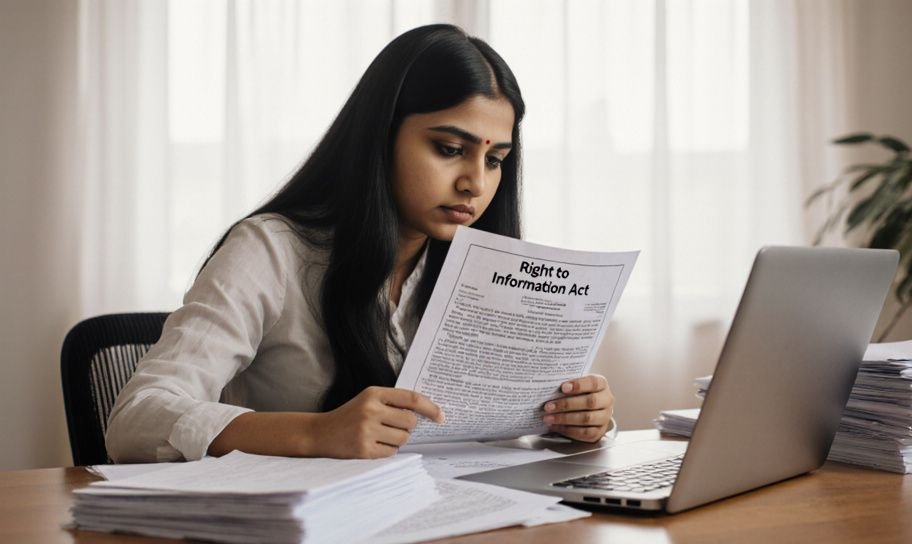
Shruti Hemant Wade and the other petitioners argued that the Maharashtra Public Service Commission (MPSC) did not give them their graded answer sheets, which they asked for under the Right to Information (RTI) Act. They claimed this was against their basic rights under Articles 14, 19(1)(a), and 21 of the Indian Constitution.
“The decision of the respondent-Authority not to provide the answer-books through RTI is illegal, arbitrary and unconstitutional.”
The petitioners insisted that their exam was graded in a careless way, without proper attention to each paper. They pointed to a previous court comment that noted similar problems.
“Evaluation of the answer-book was done in a perfunctory manner and without any individualized assessment.”
The court, led by Chief Justice Shree Chandrashekhar and Justice Gautam A. Ankhad, allowed Shruti Hemant Wade and the other petitioners to look at their answer sheets. However, it did not order a re-evaluation, following the rule that the court cannot issue a command without a legal right.
This decision highlights the ongoing challenges candidates face in competitive exams regarding transparency and fairness. While the court provided some relief, it also reinforced the limits of what courts can do in exam processes.