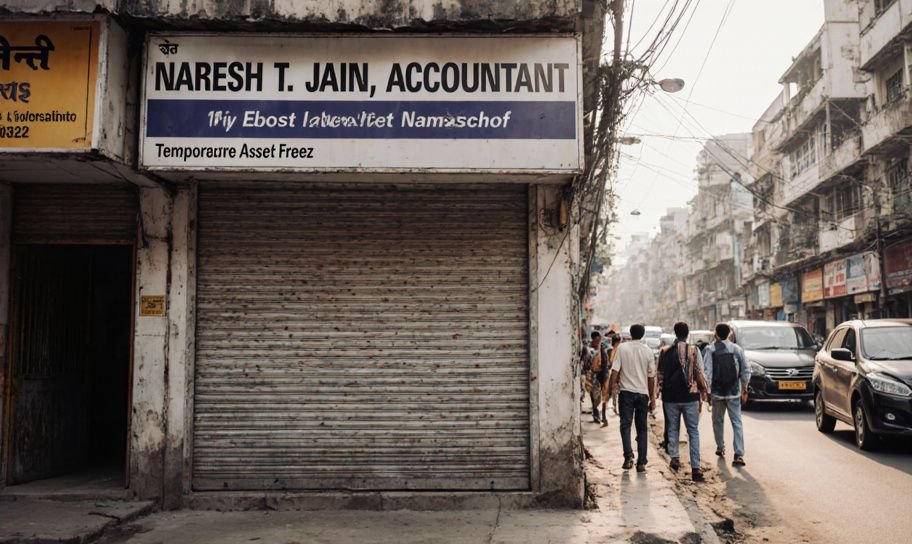
Here’s a breakdown of a recent court decision involving Naresh T. Jain and the Union of India. The Bombay High Court has ruled on the temporary freezing of properties under the Prevention of Money Laundering Act (PMLA).
Naresh T. Jain, an accountant based in Mumbai, challenged a temporary asset freeze from November 27, 2020. This order was issued by the Directorate of Enforcement (ED) under the PMLA.
The temporary asset freeze was meant to prevent Jain from accessing his assets, suspecting them to be involved in illegal money activities. However, Jain argued that the order should end after 180 days, as outlined in the PMLA.
The court, led by Judges M.S. Sonak and Advait M. Sethna, declared that the temporary asset freeze ended after 180 days, meaning it expired on May 26, 2021. The court stopped the authorities from acting on the expired order.
For Naresh T. Jain: His lawyer argued that the freeze should end after 180 days unless confirmed by a legal authority. They cited the Supreme Court’s previous rulings and decisions from other High Courts supporting this view.
For the Directorate of Enforcement (ED): The ED argued that COVID-19 pandemic-related delays should extend the freeze’s validity. They referenced Supreme Court orders that extended legal timelines due to the pandemic.
The court favored the Calcutta High Court's view, which did not extend PMLA timelines due to COVID-19, over the Delhi High Court's opposite opinion.
While the temporary asset freeze is no longer effective, the court clarified that legal proceedings could continue. This means Naresh T. Jain’s case isn't entirely over, but the temporary asset freeze is lifted.
This decision highlights the importance of sticking to legal timelines and the impact of Supreme Court rulings on such cases. It also shows the balance between legal procedures and individual rights during challenging times like the pandemic.
The court’s ruling provides clarity on how temporary orders should be handled, especially in cases involving financial crimes and the PMLA.