Two village officials in Kerala were caught in a bribery case involving illegal demands for money in exchange for processing land ownership documents. The case was decided by the High Court of Kerala at Ernakulam on November 24, 2025, with Judge A. Badharudeen in charge.
Raju K. Abraham, a former Village Officer, and Sainalabdheen, a Village Assistant, were accused of demanding bribes to speed up the process of changing the ownership of property owned by a man named Saseendran in Konny village, Pathanamthitta. The events leading to the case began on February 26, 2004.
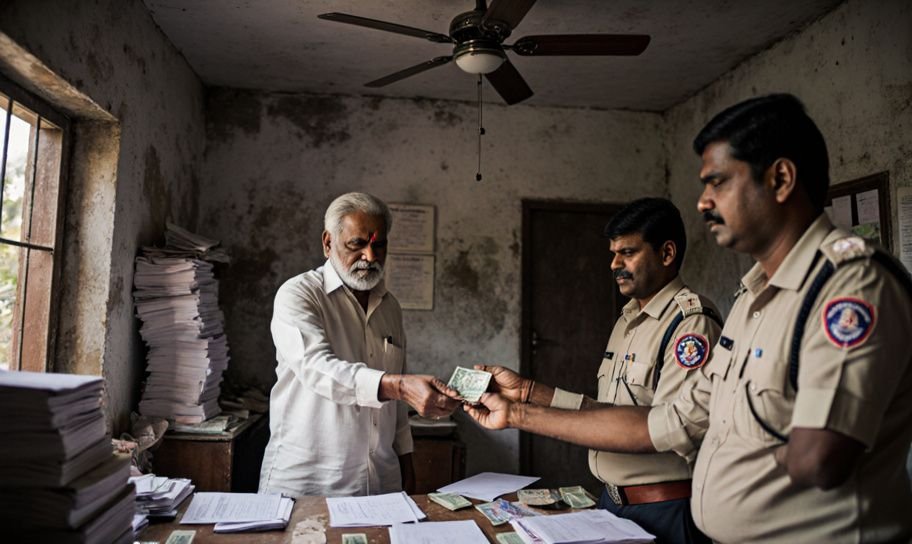
The lawyers for the government said that on February 26, 2004, Sainalabdheen asked for ₹500 from Saseendran, taking ₹200 as the first part of the payment. The remaining ₹300 was asked for by Raju K. Abraham. On March 6, 2004, during a planned operation to catch them, Raju took ₹200, and Sainalabdheen took ₹100 from Saseendran at the village office.
During the trial, different pieces of evidence were shown, including statements from witnesses and chemical tests on the money used in the bribery. The lawyers for the government relied heavily on the testimony of Saseendran (PW1), who explained the demands and payments made.
“The Village Officer and the Village Assistant told him that there would be a delay in processing the ownership change and that it would be faster if he gave them ₹500.”
The defense argued that there was no clear evidence of a bribe request. They pointed out differences in the dates and the lack of a check before the operation to catch them. They also questioned the reliability of the evidence, noting that the Village Officer was on leave on one of the days the bribe was allegedly requested.
Despite the defense's arguments, the court found the evidence strong enough to find both officials guilty. The judgment stressed the importance of proving both the request and acceptance of bribes.
"There was a request by accused Nos.1 and 2 to pay ₹500 to process the ownership change of the property of PW1, as part of a plan made between them."
The court changed the original sentence, reducing it to the legal minimum. Both were sentenced to six months of hard labor in prison and fined ₹10,000 each under the Prevention of Corruption Act, 1988.
The court found both officials guilty of accepting bribes and sentenced them to six months in prison and a fine. This case shows how public officials can be held accountable for their actions.
The accused must now report to the special court to serve their sentences, as directed by Judge A. Badharudeen.