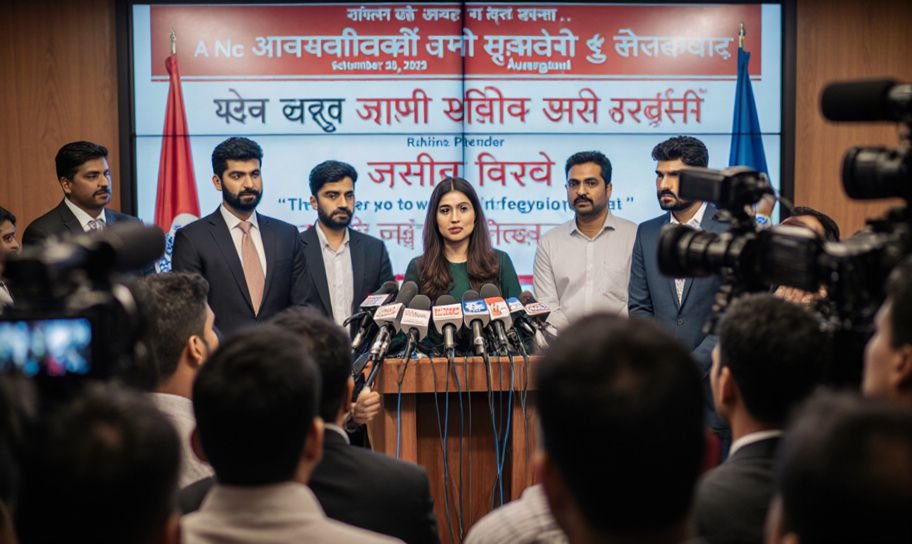
Here's a breakdown of a recent court decision involving a child marriage case in Delhi. The court decided not to drop the charges involving serious accusations. Let's dive into the details.
The case involves Prince Kumar Sharma and others who asked the court to drop the charges. The charges were filed for breaking laws under the Indian Penal Code, the Protection of Children from Sexual Offences (POCSO) Act, and the Prohibition of Child Marriage Act. It all started with a domestic violence call that led to the discovery of a child marriage.
Marriage and Charges: Prince Kumar Sharma and Respondent No. 2 said they got married with their parents' permission in March 2023. However, Respondent No. 2 was found to be underage, born on October 2, 2006. This led to the charges being filed in July 2023.
Victim's Statement: The victim, now an adult, told the court that she was living peacefully with her husband and didn't want any legal action against him or his family. She was pregnant at the time the charges were filed.
Law vs. Reality: Justice Sanjeev Narula pointed out the conflict between the law and real-life situations. The victim's age made the marriage and any sexual activity illegal under the POCSO Act, which doesn't allow minors to give consent.
The Law's Stance: The court stressed that the law treats any sexual act with a minor as a crime, regardless of consent. The POCSO Act is designed to protect children, and the court can't make exceptions for relationships where one person is almost an adult.
Legal Boundaries: The court explained that it can't make exceptions to the law based on personal situations. Even though the couple is now living as a family, the law at the time of the incident defines it as a crime.
Wider Implications: Dropping the charges could send the wrong message, potentially encouraging child marriages and undermining the purpose of the POCSO and child marriage laws.
The court, while understanding the couple's situation, rejected the request to drop the charges, stating that the law must be followed. Justice Narula's decision highlights the importance of sticking to legal rules, even in complicated and emotionally difficult cases.