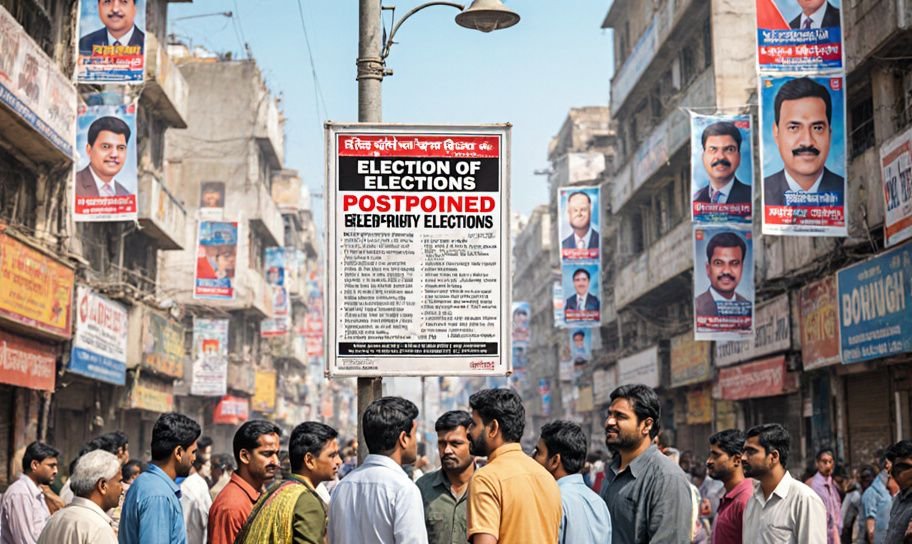
Quick Summary: The Maharashtra State Election Commission postponed elections for some local bodies just 72 hours before the voting day, leading to a legal battle. The court criticized the Commission for its last-minute decision but allowed elections to proceed with specific conditions.
On December 2, 2025, the Bombay High Court at Aurangabad, with Judges Smt. Vibha Kankanwadi and Hiten S. Venegavkar, dealt with several complaints against the Maharashtra State Election Commission's decision to delay elections. The Commission postponed elections for several local councils, scheduled for December 20, 2025, due to unresolved nomination appeals.
"The Commission’s actions are neither fair nor justified by the constitution," argued the people who filed the complaints.
The people who filed the complaints, including Sanjay Pandurang Kale, argued that the Commission's decision came too late in the process, disrupting the election schedule. They believed the Commission should have expected the delays in appeal decisions and adjusted the timeline earlier.
The State Election Commission, represented by Lawyer Mr. Sachindra Shetye, defended its decision, citing its authority under the law. They argued that the postponement was necessary to ensure fairness, allowing candidates whose appeals were approved to decide whether to stay in the race or withdraw.
The court criticized the Commission for not planning ahead and for acting at the last minute. However, it decided not to cancel the election programs, as doing so would create more confusion. Instead, it imposed conditions to ensure fairness:
Unified Result Declaration: All election results, both original and postponed, should be declared together after December 21, 2025, to avoid influencing voters.
Guidelines for Future Elections: The court directed the Commission to create guidelines to avoid similar issues in future elections.
The court emphasized the need for the Election Commission to improve its planning and avoid last-minute disruptions. It stressed the importance of maintaining the integrity and fairness of the electoral process.
"The importance of sticking to the election schedule is crucial for the trust in democratic institutions," noted the court.
This case highlights the complexities of election management and the importance of timely and clear decision-making to uphold democratic principles.